
Is this normal, or is something wrong?
Every family caregiver asks this question. The problem isn't the question. It's that there's no good way to answer it.
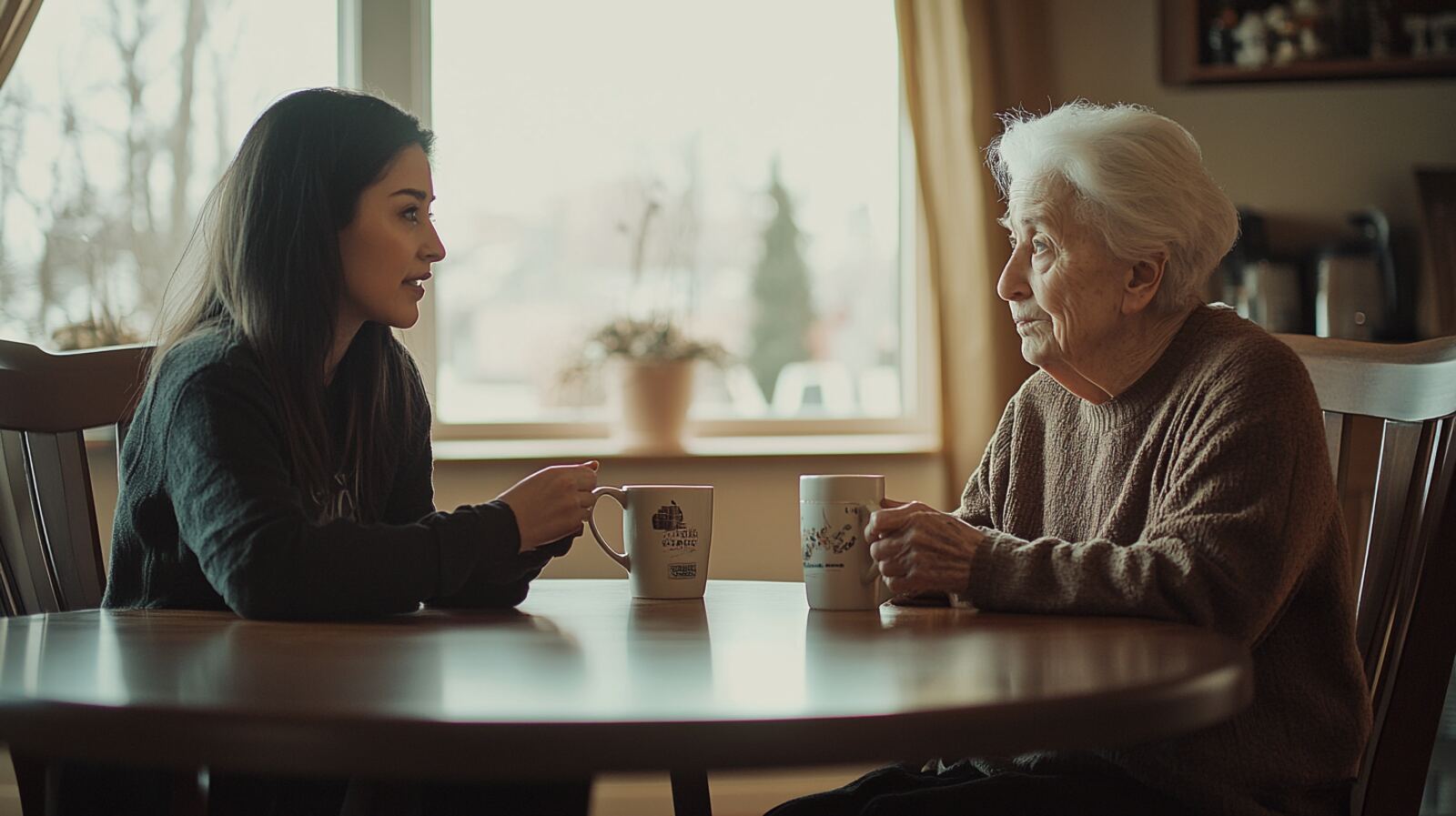
You're at your mom's house. She left the stove on again. Last week it was a missed medication. The week before, she forgot your daughter's name for a second and then remembered. Each thing, alone, could be nothing. A senior moment. A distraction. A bad day.
Together, you're not sure.
This is the question that 63 million American family caregivers carry around in their bodies, not just their minds. Is this normal aging, or is something wrong? Is the forgetfulness just forgetfulness, or is it the beginning of something you need to prepare for? Is the stove a fluke, or is it a pattern?
The question is not paranoia. It's the right question. The problem is that families have no framework for answering it. So they do the only two things the absence of a framework allows: they dismiss what they see, or they catastrophize it.
Why the answer is so hard
Normal aging is real. Cognitive processing slows. Short-term recall becomes less reliable. Energy levels decline. Physical capacity narrows. These are documented, expected, unremarkable changes that happen to everyone who lives long enough.
But decline is also real. Dementia, mobility deterioration, depression, progressive loss of independence. These are not normal aging. They require different responses, different planning, different levels of support.
The difficulty is that early decline looks almost identical to normal aging from the outside. The difference isn't in any single observation. It's in the pattern over time. A forgotten name once is nothing. A forgotten name every week is a data point. Three months of increasing forgetfulness across multiple contexts is a trend.
And families don't have trend lines. They have Tuesday.
You each see different slices
Here's what makes it worse: no one person sees the whole picture.
You see your mom on Wednesdays and Saturdays. Your brother calls on Sundays. Your sister visits once a month from out of state. The home aide comes Tuesday and Thursday. The doctor sees her every four months for 15 minutes.
Each person sees a different slice. Your Wednesday might look stable. Your brother's Sunday call might seem concerning. Your sister's monthly visit might seem fine because Mom rallies for company. None of you are wrong. You're all seeing different cross-sections of the same person on different days.
Without a shared framework, these cross-sections become competing narratives. "She seems fine" versus "I think something's wrong" becomes a family argument instead of a data problem. And the person doing the most observing, usually the primary caregiver, ends up feeling like they're being dramatic while everyone else's Tuesday contradicts their Wednesday.
The difference between noticing and knowing
You already notice things. Every family caregiver does. The mail piling up. The fridge that's emptier than usual. The laundry that's not getting done. The way she holds the railing now when she used to take the stairs two at a time.
Noticing is not the problem. The problem is that noticing, without a framework, without a baseline, without some way to track what you're seeing over time, produces anxiety rather than understanding. You notice. You worry. You can't tell if the worry is proportional because you have no measure.
Knowing requires three things that most families don't have:
A name for what you're observing. Not "something's off," but "her engagement has dropped" or "her mobility has changed." There are 15 specific dimensions of daily living that capture the full picture of independence and function. When you can name the dimension, you can track it.
A baseline to compare against. What was she like three months ago? Six months ago? Without a baseline, every observation exists in isolation. You can't tell whether today is better, worse, or the same because you don't have a stable "same" to compare it to.
A shared view. So that what you see and what your brother sees and what the home aide sees can be placed in the same picture. Not competing narratives. A composite view built from multiple observers over time.
What "normal aging" actually looks like
Normal aging produces gradual, stable changes across specific dimensions. Processing speed slows. Physical endurance narrows. Social energy may decrease. Sleep patterns shift earlier. These changes happen over years, not weeks, and they tend to be consistent rather than erratic.
Concern-level changes look different. They're faster. They affect multiple dimensions at once. They interrupt function rather than gradually reducing it. A person who gradually walks more slowly over three years is aging. A person who stopped walking to the mailbox last month after doing it daily for decades is showing something else.
The practical markers that distinguish them:
Speed of change. Normal aging is measured in years. Actionable decline is measured in weeks and months.
Pattern consistency. Normal aging produces a stable slow slope. Decline produces step-functions: sudden drops in specific areas.
Functional impact. Normal aging reduces the ceiling of what's possible. Decline interrupts things that were routine.
Multi-dimensional correlation. Normal aging might slow mobility and processing speed together, gradually. Decline often shows correlated drops: mobility, then mood, then social contact, then cognition, cascading across dimensions.
The question deserves a real answer
"She's probably fine." "Don't worry about it." "Wait and see." "Ask the doctor at her next appointment."
These are the answers families get. They're not answers. They're deferrals. And they carry a hidden message: your observation isn't valid enough to act on.
But your observation is valid. The things you notice at the kitchen table, during the phone call, in the rhythm of your parent's week, contain real information. The problem isn't your attention. It's the absence of a framework like the InPlace Score™ that connects what you see to what it means.
The question "is this normal?" deserves more than reassurance. It deserves a structured way to observe, name, track, and share what you're seeing. Not to replace clinical care. To complement it with the thing clinical care fundamentally cannot provide: a view of daily living over time, from the people who see it every day.
Sixty-three million people are asking this question. Most of them are answering it alone, with no framework, no shared view, and no way to distinguish a bad day from a bad month.
That's not acceptable. The question is too important for "wait and see."
This is part of Kintently's family caregiving library.