
Long distance caregiving: how to stay connected when you can't be there
Long distance caregiving runs on structure. Build a call cadence, a defined role, and a shared view of how your parent is doing week to week.
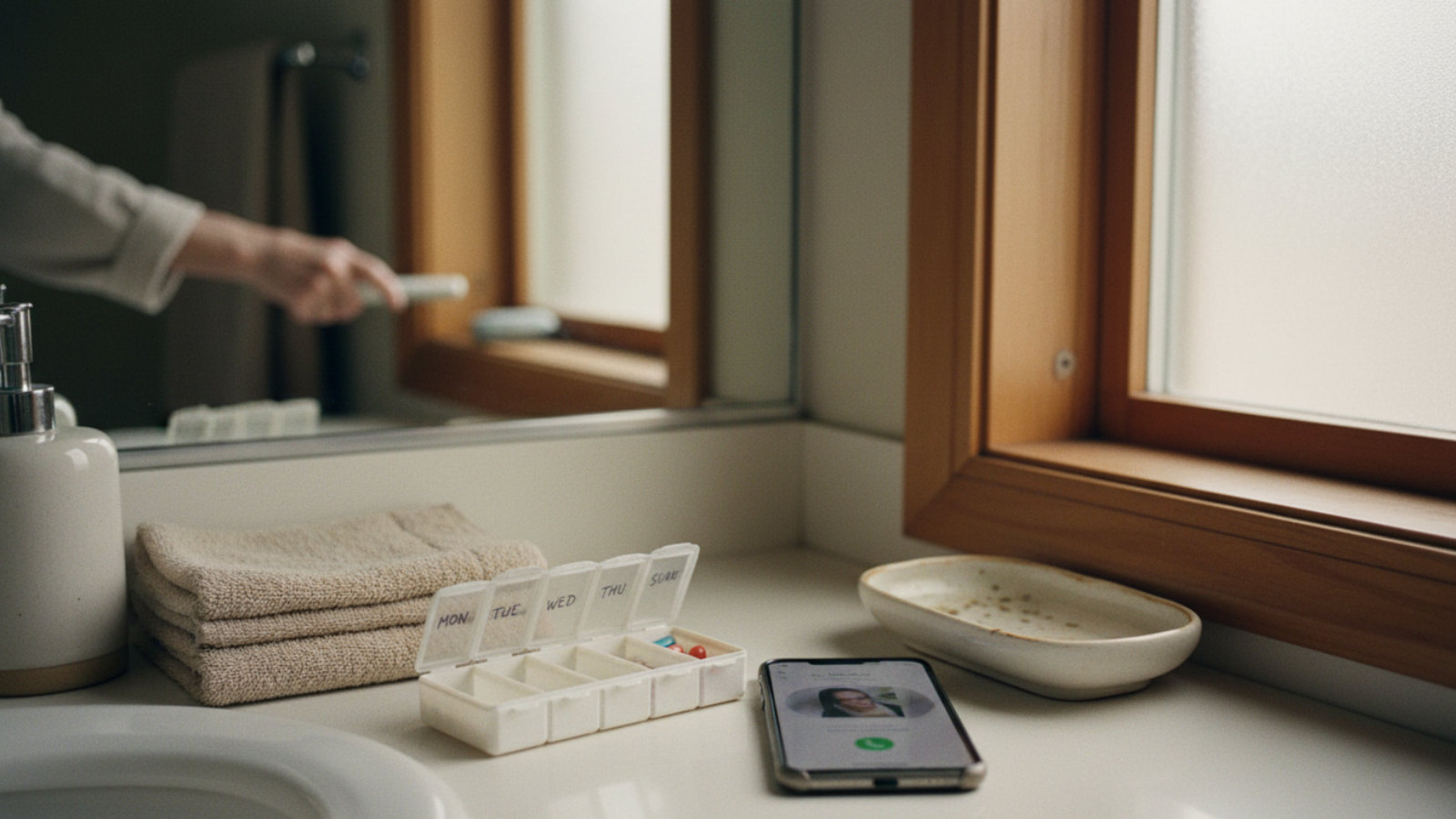
You call on Sunday. Dad says he's fine. The garden's fine, the knee's fine, the neighbor brought tomatoes. Twenty minutes later you hang up knowing exactly as much as you knew before you dialed, which amounts to his word that he's fine.
That's the core problem of long distance caregiving, and it has little to do with how much you care or how often you call. A phone call compresses a whole week of daily living into one word, and the word is almost always fine. The National Institute on Aging describes a long distance caregiver as anyone helping from an hour or more away, and the National Institutes of Health has estimated that about 7 million American adults are in that position. Many of them are working from the same thin information you are.
Distance means you need structure where proximity would have given you observation. That structure has three parts: a call cadence that produces information, a defined role that actually helps, and one shared record of how your parent is doing over time.
What long distance caregiving actually involves
Long distance caregiving is any regular care responsibility you carry for someone you can't see in person on a routine basis. In practice it usually means some mix of phone check-ins, coordinating with a sibling or neighbor who's closer, managing money or paperwork remotely, and flying in when something breaks.
The distance changes what you can do, and you still matter to the arrangement. The caregiver on the ground has eyes. You have time, attention, and often more emotional reserve, because you're not the one finding the unopened mail every day. A family care setup that shares the load uses both. It fails when the distant person becomes either a spectator who gets a summary once a month or a critic who calls with theories.
We wrote about that second version from the other side in when the sibling who lives far away wants to help. If you're the far-away one, the goal is the same from your end: turn good intentions into a defined job.
Why phone calls tell you so little
A phone call is a performance with an audience of one. Your mother knows the call is how you check on her, so she tidies herself up for it the way she'd tidy the living room before you visited. She's protecting you, and protecting her own picture of herself as someone who doesn't need checking on.
So the call gives you her account of the week, which can be quite different from the week itself. It won't tell you that she's stopped cooking and switched to crackers. It won't tell you the walker is parked by the door because the hallway feels risky now. It won't tell you she's up three times a night, because by 2 p.m. on Sunday she doesn't count that as news.
The people who do see those things, a local sibling, a neighbor, a home aide, each hold one piece. Without a place to put the pieces together, the family runs on fragments and vibes. One of you thinks she's fine. One of you thinks something's wrong. Both of you are working from partial data, and the argument that follows tends to turn into a fight about whose fragment counts. If that argument is already running in your family, how to talk to your siblings about what you're seeing is the companion piece to this one.
Build a structure: cadence, role, record
Staying connected from a distance takes a system, and good intentions alone won't hold it together.
**Set a cadence that produces information.** Keep the Sunday call, but change what it's for. Ask about specifics instead of status: what she cooked this week, how the stairs are going, whether she made it to the card game. "What did you have for dinner last night" gets you data. "How are you doing" gets you fine. Add one short midweek touchpoint, like a photo, a text, or a five-minute call, so the Sunday call isn't carrying the whole week.
**Take a role you can actually hold from far away.** Distance rules out driving to appointments, and it leaves plenty else open. Good remote jobs include managing bills and insurance paperwork, scheduling appointments and transportation, researching services, being the family's record keeper, and giving the on-the-ground caregiver a standing break by taking the evening call every night for a week. Pick one or two, name them out loud to your family, and own them completely. A defined role is easier for everyone to count on than a general offer to help.
**Keep one shared record.** Families often skip this piece. Observations scattered across three phone threads and one group chat make a pile. When everyone's notes go to the same place, in the same form, week after week, the fragments become a picture, and the picture is what you're missing from far away.
What you're really trying to see: the trend
Distance mostly costs you the ability to notice change.
Someone who sees your father every few days registers the shift without trying: he's slower on the stairs than last month, he's repeating himself a little more, the fridge is emptier than it used to be. From 800 miles away, you get snapshots months apart, and each visit lands as a shock because you're comparing him to the version from your last trip.
The fix is measuring the same things consistently, so change shows up as a trend instead of a jolt. The InPlace Score is built for that. It tracks 15 dimensions of daily living, things like mobility, nutrition, sleep, mood, and medication, through five-minute family check-ins. The score lands in one of five status bands, from Strong down to Concern, and everyone in the family group sees the same number and the same trend line.
For a long distance caregiver, that shared view does the work proximity used to do. Instead of deciding whether to worry based on the tone of a phone call, you can see your mother holding steady at Good for six weeks, or drifting from Steady toward Watch. Your sister in town logs what she sees, and you see the same entries she does. When the two of you talk, you're looking at the same picture instead of trading impressions. That's shared visibility in practice.
It also changes what your visits are for. Instead of spending the first two days auditing the house and recalibrating your sense of how bad things are, you arrive already current. The visit gets to be a visit.
Start before the crisis
For many families, long distance caregiving starts with a phone call about a fall. Then it's all triage: flights, hospital hallways, a scramble to reconstruct months of daily living from whatever anyone can remember.
The alternative is to start the structure while things are still fine. Set the cadence, claim your role, and start the record now, when the entries are boring. Boring entries are the baseline, and the baseline is what makes a real change visible later. A record that starts the week after the fall can only tell you about after.
You can't shorten the distance. You can decide how much it costs you.
**Start a family check-in with Kintently and see the same picture your family sees, from wherever you are. Try it free.**
FAQ
**What is long distance caregiving?**
Long distance caregiving is providing regular care or care coordination for a family member from an hour or more away, the definition used by the National Institute on Aging. It typically includes phone check-ins, managing finances or paperwork remotely, coordinating with local family or services, and traveling in for appointments or emergencies.
**How do I know how my parent is really doing from far away?**
Phone calls alone rarely tell you, because many parents report "fine" regardless of the week they've had. You need consistent observations over time: specific questions on a regular call cadence, input from whoever sees your parent in person, and one shared record where those observations accumulate. A structured tool like the InPlace Score turns scattered family observations into a single trend everyone can see.
**What can a long distance caregiver actually do to help?**
A long distance caregiver can do more than most people assume. Remote roles include managing bills and insurance, scheduling appointments and rides, researching services, keeping the family's shared record current, and taking over regular calls to give the local caregiver a break. Choose a defined role and own it, so your help is something the family can plan around.
**How often should I check in on an aging parent from far away?**
A practical baseline is one longer weekly call plus one short midweek touchpoint. More important than frequency is consistency and specificity: asking about the same concrete things each week, such as meals, sleep, mobility, and plans, so you can compare this week's answers to last week's.
---
```json { "@context": "https://schema.org", "@type": "Article", "headline": "Long distance caregiving: how to stay connected when you can't be there", "description": "Long distance caregiving runs on structure. Build a call cadence, a defined role, and a shared view of how your parent is doing week to week.", "author": { "@type": "Organization", "name": "Kintently" }, "publisher": { "@type": "Organization", "name": "Kintently", "url": "https://kintently.com" }, "datePublished": "2026-08-12", "dateModified": "2026-08-12", "mainEntityOfPage": { "@type": "WebPage", "@id": "https://kintently.com/resources/long-distance-caregiving" } } ```
```json { "@context": "https://schema.org", "@type": "FAQPage", "mainEntity": [ { "@type": "Question", "name": "What is long distance caregiving?", "acceptedAnswer": { "@type": "Answer", "text": "Long distance caregiving is providing regular care or care coordination for a family member from an hour or more away, the definition used by the National Institute on Aging. It typically includes phone check-ins, managing finances or paperwork remotely, coordinating with local family or services, and traveling in for appointments or emergencies." } }, { "@type": "Question", "name": "How do I know how my parent is really doing from far away?", "acceptedAnswer": { "@type": "Answer", "text": "Phone calls alone rarely tell you, because many parents report 'fine' regardless of the week they've had. You need consistent observations over time: specific questions on a regular call cadence, input from whoever sees your parent in person, and one shared record where those observations accumulate. A structured tool like the InPlace Score turns scattered family observations into a single trend everyone can see." } }, { "@type": "Question", "name": "What can a long distance caregiver actually do to help?", "acceptedAnswer": { "@type": "Answer", "text": "Remote roles include managing bills and insurance, scheduling appointments and rides, researching services, keeping the family's shared record current, and taking over regular calls to give the local caregiver a break. Choose a defined role and own it, so your help is something the family can plan around." } }, { "@type": "Question", "name": "How often should I check in on an aging parent from far away?", "acceptedAnswer": { "@type": "Answer", "text": "A practical baseline is one longer weekly call plus one short midweek touchpoint. More important than frequency is consistency and specificity: asking about the same concrete things each week, such as meals, sleep, mobility, and plans, so you can compare this week's answers to last week's." } } ] } ```
This is part of Kintently's family caregiving library.