
Signs of caregiver burnout your doctor won't ask about
Caregiver burnout rarely comes up at your parent's appointments. Learn the quiet signs, from 3 a.m. checklists to good days that stop landing.
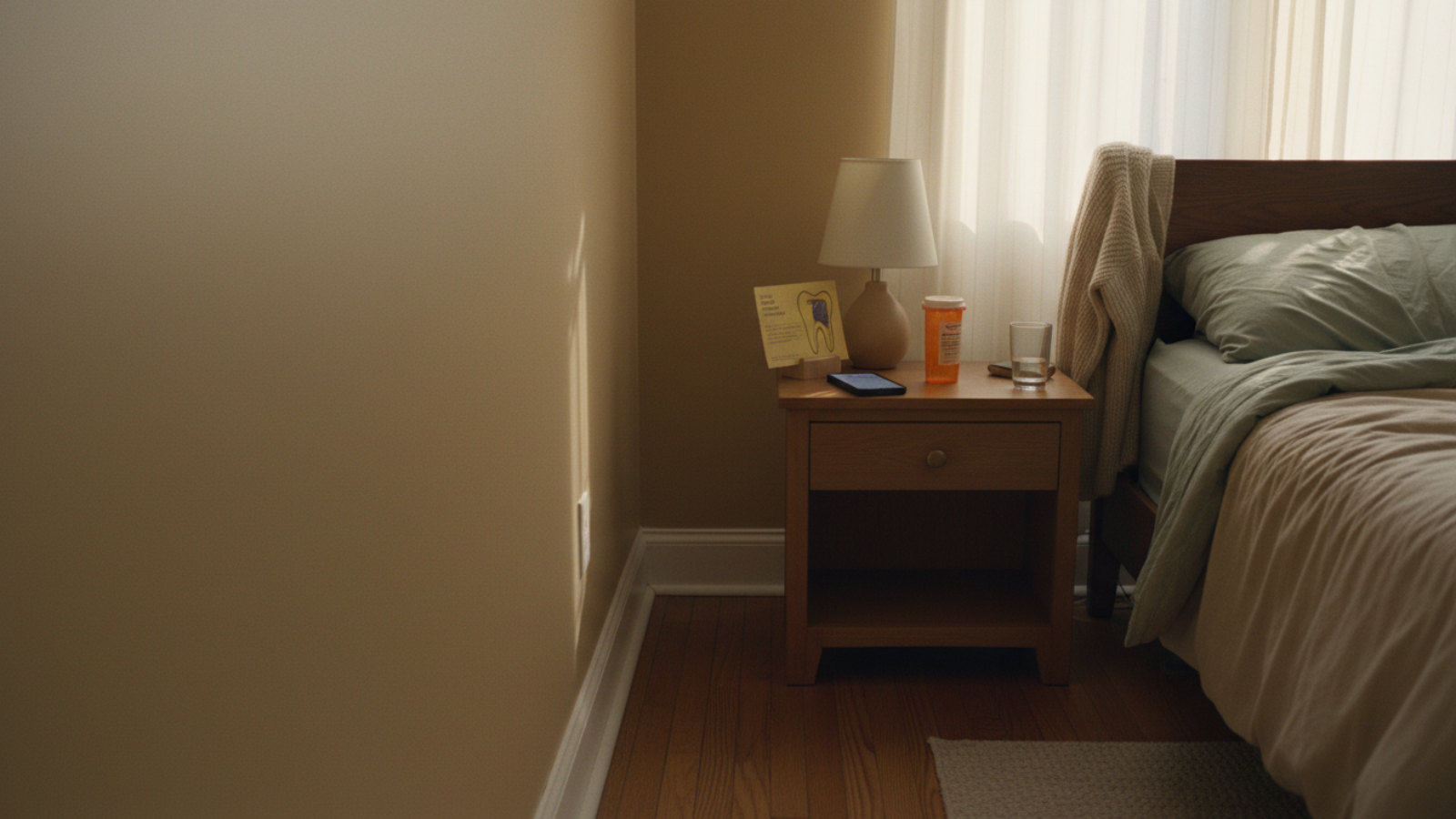
You're in the exam room with your mother. The doctor asks how she's sleeping, whether the new blood pressure medication is sitting right, if she's been steady on her feet. They're good questions, and you answer most of them, because you're the one who knows.
Nobody asks how you're sleeping.
The signs of caregiver burnout rarely surface in a medical visit, because the appointment is built around your parent. You're in the chair as the historian and translator who remembers the dates, so the questions that would catch your own exhaustion never get asked. The burnout shows up somewhere else, in patterns that don't fit on a chart: the appointments you've stopped making for yourself, the hour you wake every night, the way good days stopped registering. Once you can name those patterns, you can take them to someone who will ask about you.
Why the doctor's office misses caregiver burnout
A primary care visit is short, and every minute of it belongs to the patient. When you bring your parent in, the intake form is about their conditions, their medications, their symptoms. There's no line on it for the person who drove them there, filled the pillbox, and has been awake since 3 a.m.
So the burnout stays invisible. According to AARP's 2025 Caregiving in the US report, 63 million Americans are now family caregivers, and nearly one in four provides 40 or more hours of care a week. One in five rate their own health as fair or poor. Those caregivers are sitting in exam rooms constantly. They're just sitting in them for someone else.
The same report found that nearly one in four caregivers struggle to take care of their own health. The gap between how common that strain is and how rarely it gets named out loud is the whole problem. You can't get help for something nobody asks about, and most caregivers won't raise it themselves. Raising it feels like complaining about a job you chose.
The signs of caregiver burnout that don't show up on a chart
The textbook list of burnout symptoms is real but generic: fatigue, irritability, poor sleep, getting sick more often. Those describe anyone who's had a hard stretch. The signs below are more specific to caregiving, and they're the ones a short visit built around your parent won't catch.
**You've quietly stopped taking care of your own health.** Your dental cleaning is a year overdue. You let a prescription lapse because refilling it meant one more phone call. You had a symptom you'd have checked a year ago, and you decided it was probably nothing. Caregivers are good at rationing, and the first thing they ration is themselves. The irony is sharp: you spend your days managing someone else's medical care while letting your own go.
**You wake at the same time every night and run a checklist.** You fall asleep without trouble, then at 3 or 4 a.m. your eyes open and your mind starts the inventory: did she take the evening dose, is the back door locked, when's the next appointment. Your body lies still while your mind keeps working, and it happens on the same schedule most nights.
**Small logistics feel like large ones.** You stand in the kitchen unable to decide what to make for dinner. You forget where you parked. A two-line email takes you three tries. People call this decision fatigue, and it comes from carrying too many open loops. When you're tracking another person's daily living on top of your own, the mental ledger fills up, and ordinary choices start to feel heavy.
**You've narrowed your life without deciding to.** Someone asks what's new with you, and the only honest answer is about your mother. The hobbies went first, then the friendships that took effort, then the version of yourself that existed before any of this. It compressed gradually, a little each month, and that's why you didn't notice.
**The good days don't land.** Your father has a clear afternoon, tells a story the way he used to, and you feel almost nothing. You note that it was a good day the way you'd note the weather. When the moments that used to bring relief stop registering, your emotional reserves are likely run down past the point where good news can reach them.
If several of these sound like you, you're looking at a pattern, and patterns are worth paying attention to.
Why these signs matter more than the obvious ones
The obvious symptoms get attention because they're loud. You notice when you snap at someone or when you're sick for the third time in two months. The signs above are quiet, and quiet is what lets them build. They erode slowly enough that you adjust to each new normal, and by the time the loud symptoms arrive, you've been depleted for months.
There's a structural reason this keeps happening, and it's covered in depth in the caregiver burnout guide. Caregiving comes with no feedback. Work has reviews. Fitness has the scale. Caregiving has nothing that tells you whether you're holding steady or sliding, so you default to doing more, and doing more is what wears you through. The piece you're not a hero, you're tired sits with that feeling directly, without dressing it up.
What to do when you recognize yourself
A few small moves can shift some of the weight off your back.
**Name it to your own doctor, not your parent's.** Make an appointment that's about you. Tell them you're a family caregiver and you've noticed your sleep, your energy, or your mood changing. A clinician who knows you're carrying it can look at your sleep, mood, and health with that in mind, and point you to support.
**Make what you're seeing visible to your family.** Much of the exhaustion comes from being the only one who knows. When you're the family's single source of truth, you can never fully step away. Kintently's InPlace Score tracks 15 dimensions of daily living, from mobility and sleep to cognition and mood, and rolls them into one shared reading the whole family can see. The score also carries a burnout multiplier, a built-in factor for the primary caregiver's capacity, because if the person doing the caring is running on empty, that affects the care. The score includes you. When your brother can see that mobility slipped from Good to Steady over three weeks, you stop having to explain it, and the load gets a little lighter. See how it works.
**Get an honest read on where you are.** You've spent months trying to see your parent's patterns clearly. Turn some of that attention back on yourself. Kintently's burnout quiz takes about two minutes and gives you an honest read on what you're carrying. It isn't a diagnosis and won't fix anything on its own. Treat it as a signal, the same kind you've been trying to read in someone else. Seeing it plainly is where deciding what to do begins.
*The InPlace Score and the burnout quiz are not medical assessments. If you have concerns about your parent's health, consult their healthcare provider. If you're worried about your own, talk to yours.*
---
Frequently asked questions
**What are the signs of caregiver burnout that doctors don't ask about?** The signs that rarely come up in a medical visit include neglecting your own health and appointments, waking at the same hour each night to run mental checklists, decision fatigue over small tasks, a life that has narrowed without your choosing it, and an inability to feel relief on good days. These are more specific to caregiving than the commonly listed symptoms like fatigue and irritability, and a short appointment built around your parent won't catch them.
**Why don't doctors ask caregivers about burnout?** A primary care visit is short and built around the patient. When you bring your parent in, you're there as the historian and translator, so the intake form and the questions all center on them. There's no structured prompt to ask how the caregiver is holding up, and most caregivers won't raise it on their own.
**How do I know if I'm burned out or just tired?** Ordinary tiredness resolves with rest. Caregiver burnout doesn't, because the conditions that caused it are still there when you come back. If you recognize several of the quiet signs, like rationing your own care, broken sleep on a schedule, or good days that no longer register, that points to a pattern rather than a hard week. Kintently's two-minute burnout quiz can give you a clearer read.
**What should I do if I recognize the signs of burnout in myself?** Start with three steps. Make a medical appointment that's about you and tell your doctor you're a family caregiver. Make what you're observing in your parent visible to the rest of your family so you're not the only one who knows. And get an honest read on where you stand, which is what Kintently's burnout quiz is for.
---
*Suggested JSON-LD (Article schema):*
```json { "@context": "https://schema.org", "@type": "Article", "headline": "Signs of caregiver burnout your doctor won't ask about", "description": "Caregiver burnout rarely comes up at your parent's appointments. Learn the quiet signs, from 3 a.m. checklists to good days that stop landing.", "author": { "@type": "Organization", "name": "Kintently" }, "publisher": { "@type": "Organization", "name": "Kintently", "logo": { "@type": "ImageObject", "url": "https://kintently.com/logo.svg" } }, "datePublished": "2026-06-17", "dateModified": "2026-06-17", "mainEntityOfPage": "https://kintently.com/resources/signs-of-caregiver-burnout-doctor-wont-ask", "keywords": ["signs of caregiver burnout", "caregiver burnout symptoms", "caregiver burnout", "am I burned out as a caregiver", "caregiver burnout quiz"] } ```
```json { "@context": "https://schema.org", "@type": "FAQPage", "mainEntity": [ { "@type": "Question", "name": "What are the signs of caregiver burnout that doctors don't ask about?", "acceptedAnswer": { "@type": "Answer", "text": "The signs that rarely come up in a medical visit include neglecting your own health and appointments, waking at the same hour each night to run mental checklists, decision fatigue over small tasks, a life that has narrowed without your choosing it, and an inability to feel relief on good days. These are more specific to caregiving than commonly listed symptoms like fatigue and irritability, and a short appointment built around your parent won't catch them." } }, { "@type": "Question", "name": "Why don't doctors ask caregivers about burnout?", "acceptedAnswer": { "@type": "Answer", "text": "A primary care visit is short and built around the patient. When you bring your parent in, you're there as the historian and translator, so the intake form and the questions all center on them. There's no structured prompt to ask how the caregiver is holding up, and most caregivers won't raise it on their own." } }, { "@type": "Question", "name": "How do I know if I'm burned out or just tired?", "acceptedAnswer": { "@type": "Answer", "text": "Ordinary tiredness resolves with rest. Caregiver burnout doesn't, because the conditions that caused it are still there when you come back. If you recognize several of the quiet signs, like rationing your own care, broken sleep on a schedule, or good days that no longer register, that points to a pattern rather than a hard week. Kintently's two-minute burnout quiz can give you a clearer read." } }, { "@type": "Question", "name": "What should I do if I recognize the signs of burnout in myself?", "acceptedAnswer": { "@type": "Answer", "text": "Start with three steps. Make a medical appointment that's about you and tell your doctor you're a family caregiver. Make what you're observing in your parent visible to the rest of your family so you're not the only one who knows. And get an honest read on where you stand, which is what Kintently's burnout quiz is for." } } ] } ```
This is part of Kintently's family caregiving library.