
Aging parent safety checklist: what to watch for
Use this aging parent safety checklist to walk the house room by room, spot small fall risks, and watch how your parent is moving over time.
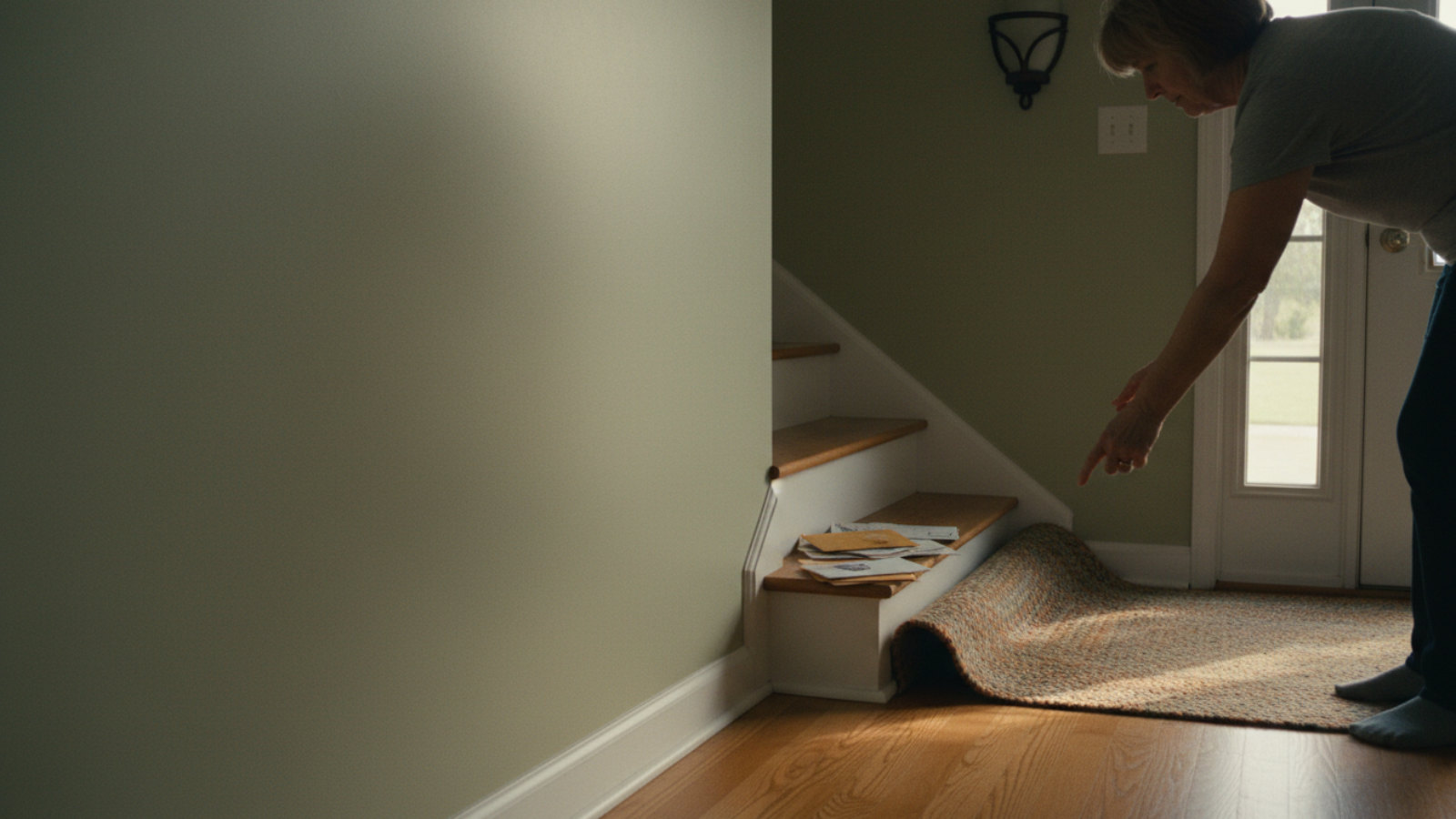
You visit on a Sunday and the house looks the way it always has. Then you notice the throw rug by the front door has a curled corner, the hallway bulb is out, and there's a stack of mail sitting on the second stair. None of it is an emergency. Any one of them is the kind of thing a person steps over a hundred times until the day they don't.
If you've gone looking for an aging parent safety checklist, you've probably had a moment like that: a near miss, a worried phone call, or a visit where something looked off. A checklist is a good place to start, because it turns a vague worry into specific things you can put your eyes on. Start with the house, room by room. Then look at your parent, and at what the changes mean when you watch them over time.
*This checklist is general safety information for families and doesn't replace advice from your parent's doctor. The InPlace Score records family observations using the ADL and IADL structure and is never a clinical assessment. Sudden confusion, a fall with injury, or trouble breathing calls for a same-day call to their doctor, or 911 if it's severe. If your parent has fallen and is hurt or can't get up, call 911.*
What an aging parent safety checklist is actually for
An aging parent safety checklist is a structured way to spot the small hazards in a home, and the small changes in a person, that raise the risk of a fall or an injury before one happens. You'll spend most of the time noticing what's already there.
Many falls start with something ordinary, like a sock on a smooth floor, a grab bar that was never installed, or a step taken in the dark. According to the CDC, about one in four adults aged 65 and older falls each year, and falls are the leading cause of injury-related death in that age group. Because so many of the hazards are small and ordinary, a plain checklist catches a lot of them.
Walk the house the way your parent moves through it. Start at the door they actually use, follow the path to the bathroom they get up for at night, and pay attention to the rooms where they spend the most time.
The room-by-room safety checklist
Go space by space. The goal is to find the spots where a small stumble has nothing to catch it.
**Entryway and stairs.** Look at every threshold and every step.
- Throw rugs and runners that slide, curl, or bunch - Stairs without a sturdy handrail, or with a rail on only one side - Steps used for storage, even temporarily - A dark entryway with no light switch within reach of the door - Outdoor steps with no rail, loose brick, or moss
**Bathroom.** Bathrooms are a common place for falls, because the surfaces are hard and often wet.
- No grab bars by the toilet or in the tub and shower - A bath mat that isn't secured, or a slick tub floor with no non-slip strip - A toilet seat that sits low and is hard to rise from - Water heater set high enough to scald - A medicine cabinet so crowded it's hard to tell one bottle from another
**Kitchen.** Look at what your parent reaches for every day.
- Everyday dishes and food stored on high shelves or low cabinets that require a stool or a deep bend - A stove left on, or scorched pot bottoms that suggest it has been - Expired food in the fridge, or very little food at all - Spills or sticky spots on the floor that went unnoticed
**Bedroom and the nighttime path.** Many older adults get up during the night, often in the dark.
- No lamp or light switch within reach of the bed - A clear, lit path from the bed to the bathroom - A phone, and a way to call for help, reachable from the floor - A bed that's too high or too low to get in and out of easily
**Floors and lighting, everywhere.** These cut across every room.
- Cords running across walkways - Clutter in the paths your parent uses most - Dim bulbs, burned-out bulbs, and rooms lit by a single lamp - Slick floors, loose tiles, or transitions between flooring types that catch a toe
For a broader look at what to assess, and how to share what you find with the rest of the family, see our aging parent assessment guide.
What to watch in your parent
The house can pass every line on the list and the risk can still be rising. A safe home doesn't help if the person moving through it is less steady than they were three months ago. So the second half of any honest safety check is about your parent.
**Mobility and balance.** Watch how they stand up from a chair. Notice whether they reach for furniture as they cross a room, whether they've started shuffling, whether one foot drags. Reaching for the wall is the body asking for a grab bar before anyone has installed one.
**Medication.** A new prescription can cause dizziness or drowsiness that wasn't there last month. Look at whether doses are being missed, doubled, or taken at the wrong time. A pillbox that's still full on Thursday tells you something.
**Vision and cognition.** Watch for squinting at labels, leaving lights off, missing a step they've climbed for 40 years, or forgetting whether the stove is on. These changes alter how safe a familiar room is, even when nothing in the room has moved.
**Eating and hydration.** Someone who isn't eating or drinking enough gets lightheaded, and lightheaded is how a steady person ends up on the floor. The kitchen often tells this story before your parent does. We wrote about reading those signals in what you notice at the kitchen table.
Safety changes between checklists
Any checklist, including this one, tells you about today. You walk the house, you mark the boxes, you install the grab bars, and you feel better for a while. Safety at home drifts over weeks and months. The handrail is fine in March and the person holding it is a little less steady by June, and no single Sunday visit catches the slope.
Kintently tracks that drift. The InPlace Score covers 15 dimensions of daily living, and Safety is one of them, alongside Mobility, Balance, Medication, and Cognition. Each check-in adds to a reading over time, sorted into status bands from Strong down to Concern. When Mobility readings slip across a few weeks, you can see the drift while it's still small and bring it to their doctor.
It also means your family is looking at the same thing. You visit every week, your brother visits twice a year, and the two of you can stop arguing about whether Mom is "fine." The score is one shared view, so everyone can see a safety concern without you having to keep proving it. See how it works.
The family check-in also asks how you're holding up, because the person walking the house with the checklist is part of the picture too. If you want an honest read on where you stand, the burnout quiz takes about two minutes. You've been watching your parent closely. This turns some of that attention back on yourself.
---
Frequently asked questions
**What should be on an aging parent safety checklist?** A good aging parent safety checklist covers the home room by room and the person moving through it. In the home: secure or remove throw rugs, add grab bars and a non-slip surface in the bathroom, install handrails on stairs, keep nighttime paths lit and clear, and move everyday items off high shelves and low cabinets. In the person: watch mobility and balance, medication timing and side effects, vision, and whether they're eating and drinking enough. The home items prevent the obvious hazards. The personal items catch the changes a one-time walk-through can miss.
**Where do most falls happen in an older adult's home?** The bathroom and the stairs are common places for falls, because the surfaces are hard and often wet. The nighttime path from the bed to the bathroom is another common spot, since it's usually traveled in the dark. About one in four adults aged 65 and older falls each year, according to the CDC, and small, ordinary hazards like loose rugs, clutter, and poor lighting are common contributors.
**How often should I check my aging parent's home for safety?** Walk the home in full on a regular schedule, such as every few months, and after any change like a new medication, a hospital stay, a move, or a noticeable shift in how your parent moves. Safety drifts between checks. A handrail that was fine in spring stays the same while the person holding it changes. Tracking daily living over time, the way the InPlace Score does across 15 dimensions, fills the gap between full walk-throughs.
**What's the difference between a safety checklist and tracking my parent over time?** A checklist is a snapshot of one day. It's useful for finding hazards you can fix right away, like a loose rug or a missing grab bar. Tracking shows you change. It tells you whether your parent's mobility, balance, and safety are holding steady or sliding week to week. The two work together: the checklist handles the house today, and tracking handles the trend.
---
*Suggested JSON-LD (Article schema):*
```json { "@context": "https://schema.org", "@type": "Article", "headline": "Aging parent safety checklist: what to watch for", "description": "Use this aging parent safety checklist to walk the house room by room, spot small fall risks, and watch how your parent is moving over time.", "author": { "@type": "Organization", "name": "Kintently" }, "publisher": { "@type": "Organization", "name": "Kintently", "logo": { "@type": "ImageObject", "url": "https://kintently.com/logo.svg" } }, "datePublished": "2026-06-24", "dateModified": "2026-06-24", "mainEntityOfPage": "https://kintently.com/resources/aging-parent-safety-checklist", "keywords": ["aging parent safety checklist", "signs aging parent needs help", "parent falling more often", "aging in place safety", "home safety for elderly parents"] } ```
```json { "@context": "https://schema.org", "@type": "FAQPage", "mainEntity": [ { "@type": "Question", "name": "What should be on an aging parent safety checklist?", "acceptedAnswer": { "@type": "Answer", "text": "A good aging parent safety checklist covers the home room by room and the person moving through it. In the home: secure or remove throw rugs, add grab bars and a non-slip surface in the bathroom, install handrails on stairs, keep nighttime paths lit and clear, and move everyday items off high shelves and low cabinets. In the person: watch mobility and balance, medication timing and side effects, vision, and whether they're eating and drinking enough. The home items prevent the obvious hazards. The personal items catch the changes a one-time walk-through can miss." } }, { "@type": "Question", "name": "Where do most falls happen in an older adult's home?", "acceptedAnswer": { "@type": "Answer", "text": "The bathroom and the stairs are common places for falls, because the surfaces are hard and often wet. The nighttime path from the bed to the bathroom is another common spot, since it's usually traveled in the dark. About one in four adults aged 65 and older falls each year, according to the CDC, and small, ordinary hazards like loose rugs, clutter, and poor lighting are common contributors." } }, { "@type": "Question", "name": "How often should I check my aging parent's home for safety?", "acceptedAnswer": { "@type": "Answer", "text": "Walk the home in full on a regular schedule, such as every few months, and after any change like a new medication, a hospital stay, a move, or a noticeable shift in how your parent moves. Safety drifts between checks. A handrail that was fine in spring stays the same while the person holding it changes. Tracking daily living over time, the way the InPlace Score does across 15 dimensions, fills the gap between full walk-throughs." } }, { "@type": "Question", "name": "What's the difference between a safety checklist and tracking my parent over time?", "acceptedAnswer": { "@type": "Answer", "text": "A checklist is a snapshot of one day. It's useful for finding hazards you can fix right away, like a loose rug or a missing grab bar. Tracking shows you change. It tells you whether your parent's mobility, balance, and safety are holding steady or sliding week to week. The two work together: the checklist handles the house today, and tracking handles the trend." } } ] } ```
This is part of Kintently's family caregiving library.