
Caregiving family conflict: why it happens and what actually helps
Caregiving family conflict usually starts with unequal work and unequal information. See why siblings fight over a parent's care and what reduces it.
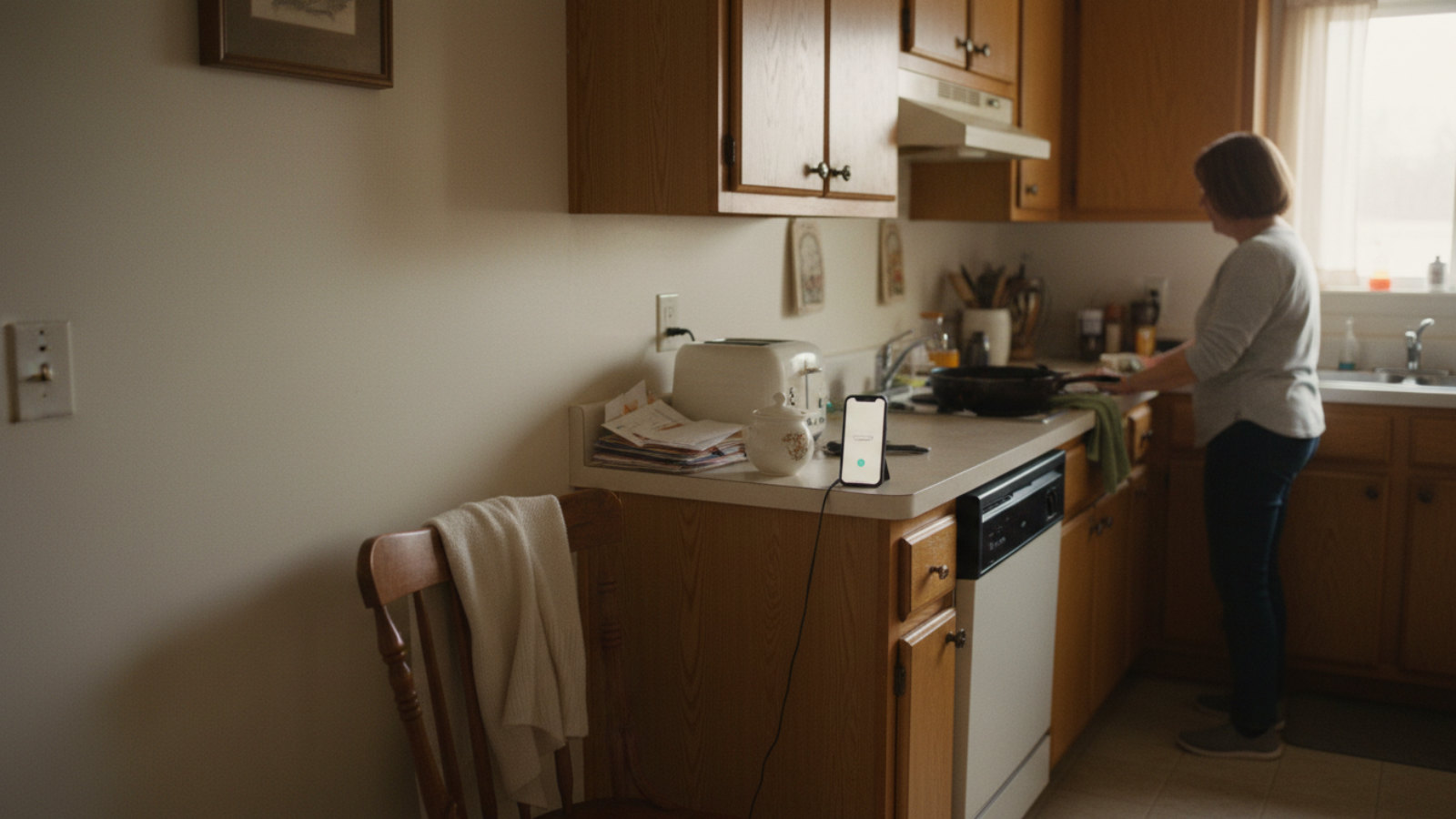
Your brother called on a Sunday, talked to your mother for 11 minutes, and reported back that she sounded great. You had been there Thursday. The mail was stacked unopened on the counter, she'd worn the same cardigan she had on the week before, and she asked you twice where you'd parked.
Both of those are true, and families tend to miss it. Caregiving family conflict usually starts with two people looking at genuinely different amounts of evidence, each believing they've seen the whole thing.
The fight that follows tends to get filed as a personality problem. Your brother is in denial, your sister is controlling, you're a martyr. Underneath, it's usually two structural problems: the work isn't divided evenly, and the information isn't shared evenly. Both of those are things a family can change.
*The InPlace Score is not a medical assessment. If you have concerns about your parent's health, consult their healthcare provider. Sudden confusion, a fall with injury, or trouble breathing needs a same-day call to their doctor, or 911.*
What the argument is usually about
Ask a family what they're fighting about and you'll hear specifics: whether Mom should still drive, whether the stairs are a problem, whether anyone needs to fly in.
Ask a few more questions and the specifics usually trace back to something underneath them.
**How much is happening.** The person on site has watched six months of small changes accumulate. The person calling in has a phone voice, a holiday visit, and a parent actively performing competence for the child who isn't there every week. Your mother works hard on those calls. That effort is real, and it's why your brother believes her.
**Who does the work.** In AARP and the National Alliance for Caregiving's Caregiving in the U.S. 2025 report, nearly 1 in 4 family caregivers said they provide 40 or more hours of care a week. When one sibling is carrying most of that and another is carrying almost none, every conversation about your parent arrives with the ledger attached, whether or not anyone says so.
**Who gets to decide.** Adult siblings don't have a chain of command. Birth order and old roles quietly fill the gap, and a 58-year-old ends up taking orders from a 61-year-old on the basis of nothing but age.
Families tend to argue about the first one because it feels safest to say out loud.
Why caregiving family conflict follows distance
The sibling who lives 20 minutes away and the sibling who lives 2,000 miles away are disagreeing about two different data sets.
The local one sees the house: expired food, a scorched pan, the pile by the door, how long it takes to get from the car to the porch. The distant one sees a scheduled, prepared version. Both are describing something accurate. Only one of them is describing the ordinary Tuesday.
Then guilt enters, and it doesn't arrive politely. The sibling who isn't there often knows it, and the discomfort tends to come out as questioning your account rather than accepting it. If nothing is actually wrong, there's nothing to have missed. Doubt is cheaper than a plane ticket.
Meanwhile the local sibling stops sharing. Reporting each thing has started to feel like building a case, and losing an argument about the cardigan costs more energy than just handling it alone. Six months of that and one person holds all the information and all the work, an arrangement everyone later describes as unfair.
Our guide to long distance caregiving covers the far-away side of this. The near side is harder to write about, because the main symptom is silence.
The conversation that makes it worse
There's a version of this talk that families have over and over. It opens with a summary of the last three months, delivered by the person who's tired, to people who weren't there.
A summary has a conclusion built in, the listener can hear it coming, and their job in the conversation becomes deciding whether to accept your verdict about your own parent.
Leading with the total makes it worse, because "I do everything" is true and it's also the first line of a fight. So does bringing up six months at once, when people can only really respond to Thursday. An ask framed around fairness gives the other person nothing to agree to, since "You should help more" has no version of yes, and holding the talk on a holiday adds an audience and a schedule.
How to talk to your siblings about what you're seeing covers the version of this conversation that tends to work: one observation, one date, one request.
What actually reduces it
**Give everyone the same record.** Most of this conflict runs on asymmetry. When your brother sees only what you choose to tell him, and you only tell him the things worth the argument, he's reasoning from a filtered feed and doesn't know it. A shared, dated record of what's actually happening takes your credibility out of the discussion.
This is what the InPlace Score is for. It tracks 15 dimensions of daily living, things like mobility, nutrition, sleep, medication, and mood, and reports a reading across five status bands from Strong down to Concern. Everyone in the family group sees the same number and the same trend. The argument shifts from whether something is happening to what to do about it, and families are much better at that conversation. See how it works.
**Split the work into named tasks.** "Share the load" is too vague for anyone to act on. Pharmacy runs, the insurance calls, the Tuesday check-in, the neighbor's phone number, and the taxes are each a job someone can own. Named jobs with named owners can be done, tracked, and traded. A percentage can only be disputed.
**Give the distant sibling something real.** Remote work exists and it's substantial: appointment scheduling, bill paying, insurance appeals, researching options, and the standing Wednesday call. The sibling doing nothing is often the sibling who was never asked for anything specific and concluded there was nothing to do.
Our family caregiving coordination guide has the full division-of-labor framework.
When it isn't really about the care
Sometimes the conflict is about money, an old inheritance conversation, a marriage nobody approved of, or something from 1987 that got handled by everyone agreeing not to mention it.
Caregiving is very good at reopening that. It puts adult children back in a house with their original roles, at a moment when the person who used to manage the family is no longer managing anything.
You're unlikely to settle the old thing, and trying usually costs you the current conversation too. Narrow each conversation to this week, this task, or this decision. If money is genuinely the issue, that belongs in a separate conversation with an elder law attorney or a mediator, kept apart from whether your mother should be driving.
Some versions get serious. If a sibling is controlling access to your parent, making unilateral financial decisions, or blocking medical information, the situation has moved past a family disagreement. Adult protective services and elder law attorneys handle these cases, and your local area agency on aging, which you can find through the Eldercare Locator, can point you toward both. If your parent is in immediate danger, call 911.
If it's already broken
Some of these don't get repaired, or don't get repaired now. That's worth saying plainly, because the advice around family caregiving tends to assume everyone eventually comes around.
You can still keep the record, so the facts exist whether or not anyone agrees about them. Keep the door open with the smallest possible ask, since a specific task is easier to say yes to than a relationship is to repair. And count yourself in the arithmetic, because a plan that works only as long as you don't get sick will fail the first time you do.
The Kintently family check-in tracks caregiver burnout for exactly that reason, so your capacity is on the record from the first check-in.
**See what your family is actually looking at.** Start a family check-in and get your first InPlace Score in five to 10 minutes.
If the harder question is how much of this you're carrying alone, the caregiver burnout quiz takes a couple of minutes.
---
Frequently asked questions
**Why do siblings fight about a parent's care?**
Usually the reasons are structural. The work is divided unevenly, so one sibling carries most of the daily care while others carry little, and the information is divided unevenly, so the local sibling sees ordinary days while distant siblings see prepared visits and phone calls. Old family roles then fill the gap where no decision-making authority exists, which is why disagreements about a parent's care often sound like arguments from childhood.
**How do you resolve caregiving family conflict?**
Start by giving everyone the same information, because most of the conflict runs on one person having seen things the others haven't. Then divide the work into named tasks with named owners rather than into percentages, and give distant siblings specific remote jobs such as insurance calls, scheduling, or bill paying. Keep each conversation to one observation and one request instead of summarizing months at once.
**What do you do when a sibling denies a parent is declining?**
Stop arguing from memory and start sharing dated observations as they happen. Denial is usually a reasoning problem, since the sibling is working from a small and flattering sample. A shared record that tracks the same dimensions over time lets them see the trend themselves, which they'll accept more readily than they'll accept your conclusion about it.
**When is family conflict over caregiving serious enough to get outside help?**
Get outside help when one sibling starts controlling access, money, or information. Blocking access to your parent, making unilateral financial decisions, or withholding medical information call for more than a family conversation. Contact an elder law attorney, a professional care manager, or adult protective services. Area agencies on aging can make referrals, and mediators who specialize in elder care disputes handle the cases that fall short of that line but aren't moving on their own.
---
```json { "@context": "https://schema.org", "@type": "Article", "headline": "Caregiving family conflict: why it happens and what actually helps", "description": "Caregiving family conflict usually starts with unequal work and unequal information. See why siblings fight over a parent's care and what reduces it.", "datePublished": "2026-09-23", "dateModified": "2026-10-23", "author": { "@type": "Organization", "name": "Kintently", "url": "https://kintently.com" }, "publisher": { "@type": "Organization", "name": "Kintently", "url": "https://kintently.com", "logo": { "@type": "ImageObject", "url": "https://kintently.com/logo.svg" } }, "mainEntityOfPage": { "@type": "WebPage", "@id": "https://kintently.com/resources/family-caregiving-conflict" }, "about": [ { "@type": "Thing", "name": "Family caregiving" }, { "@type": "Thing", "name": "Sibling relationships" }, { "@type": "Thing", "name": "Aging parents" } ] } ```
```json { "@context": "https://schema.org", "@type": "FAQPage", "mainEntity": [ { "@type": "Question", "name": "Why do siblings fight about a parent's care?", "acceptedAnswer": { "@type": "Answer", "text": "Usually the reasons are structural. The work is divided unevenly, so one sibling carries most of the daily care while others carry little, and the information is divided unevenly, so the local sibling sees ordinary days while distant siblings see prepared visits and phone calls. Old family roles then fill the gap where no decision-making authority exists." } }, { "@type": "Question", "name": "How do you resolve caregiving family conflict?", "acceptedAnswer": { "@type": "Answer", "text": "Start by giving everyone the same information, because most of the conflict runs on one person having seen things the others have not. Then divide the work into named tasks with named owners rather than into percentages, and give distant siblings specific remote jobs such as insurance calls, scheduling, or bill paying. Keep each conversation to one observation and one request instead of summarizing months at once." } }, { "@type": "Question", "name": "What do you do when a sibling denies a parent is declining?", "acceptedAnswer": { "@type": "Answer", "text": "Stop arguing from memory and start sharing dated observations as they happen. Denial is usually a reasoning problem, since the sibling is working from a small and flattering sample. A shared record that tracks the same dimensions over time lets them see the trend themselves, which they will accept more readily than they will accept someone else's conclusion about it." } }, { "@type": "Question", "name": "When is family conflict over caregiving serious enough to get outside help?", "acceptedAnswer": { "@type": "Answer", "text": "Get outside help when one sibling starts controlling access, money, or information. Blocking access to a parent, making unilateral financial decisions, or withholding medical information call for more than a family conversation. Contact an elder law attorney, a professional care manager, or adult protective services. Area agencies on aging can make referrals, and mediators who specialize in elder care disputes handle cases that fall short of that line." } } ] } ```
---
Sources referenced
- AARP and National Alliance for Caregiving, Caregiving in the U.S. 2025 (share of caregivers providing 40 or more hours of care a week) - Eldercare Locator / Administration for Community Living, area agencies on aging referral pathways for care management, mediation, and adult protective services
This is part of Kintently's family caregiving library.