
What your aging parent's home is telling you: an aging in place home assessment
An aging in place home assessment checks the house for hazards. Learn to read it as a record of what your parent can still do, too.
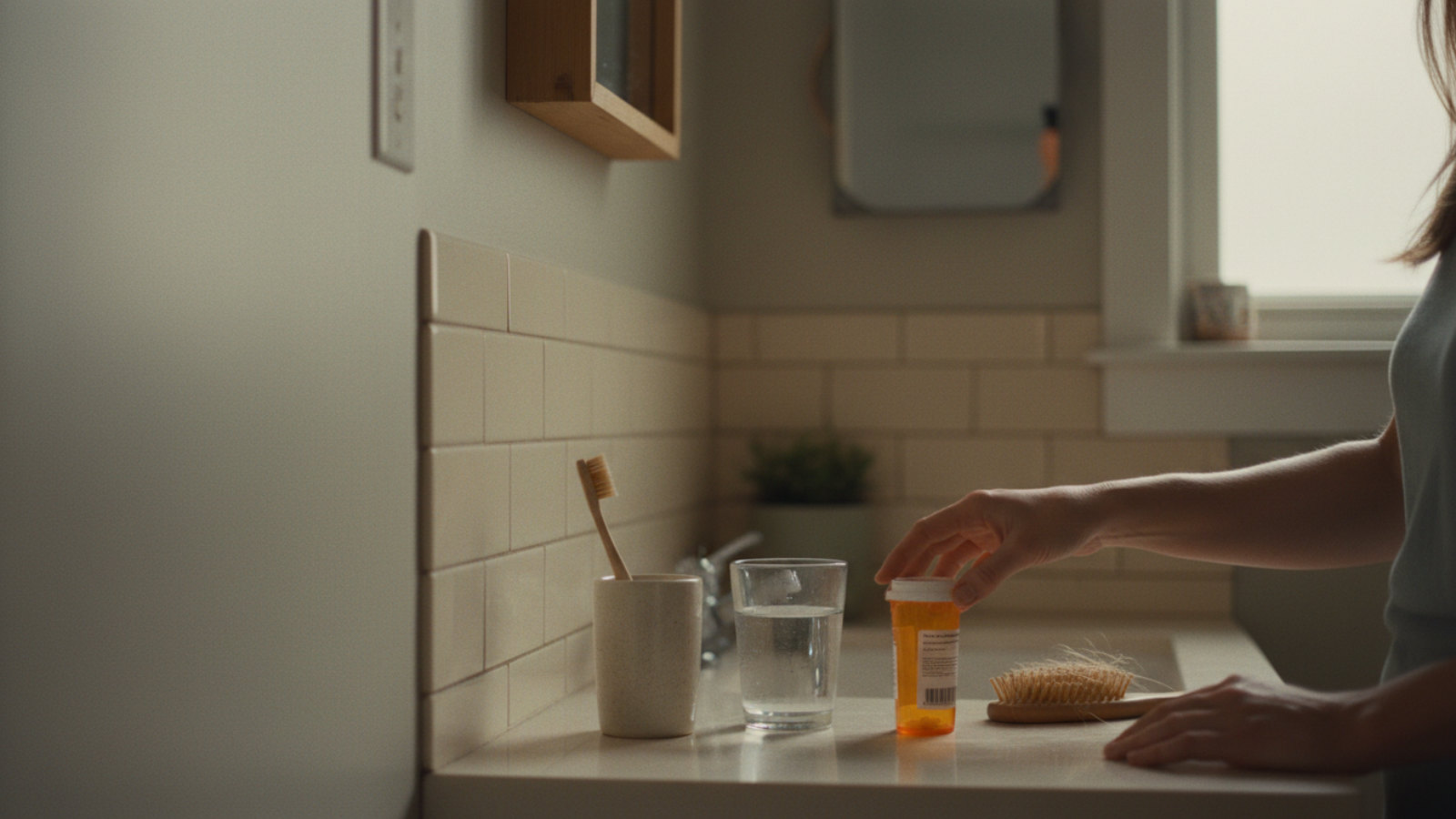
You drove up for the weekend. The house looked the way it always looks, which is to say you stopped seeing it about 30 years ago. Then you opened the refrigerator to put the milk away and found four cartons of milk, three of them unopened, one of them from July.
You closed the door. You didn't say anything, because what is there to say. She's fine. The kitchen's clean. The bills are stacked where the bills go.
Most advice about an aging in place home assessment will tell you to look at the house: grab bars, throw rugs, the light at the top of the stairs. That advice is correct and you should follow it. It covers half of what's in front of you. The house is also a record of what your parent has been doing every day for the last six months, written down in a language nobody taught you to read, and four cartons of milk belong in that record.
*This article is general information for families. The InPlace Score is not a medical assessment. If you have concerns about your parent's health, consult their healthcare provider.*
What a standard aging in place home assessment covers
Start with the version everyone agrees on, because it's genuinely useful and it's fast.
Falls are the reason this checklist exists. According to the CDC, more than one in four adults 65 and older falls each year, about 14 million people, and one in five falls causes a serious injury such as a broken bone or a head injury. Falling once doubles the chance of falling again, and fewer than half of older adults who fall tell their doctor. If your parent falls and is hurt, hits their head, or can't get up, call their doctor that day, or 911 for a serious injury.
The standard sweep, drawn from the CDC's Check for Safety checklist and the National Institute on Aging's room-by-room guidance, covers these areas:
- **Floors.** Loose rugs, cords across walkways, anything stacked on the stairs. - **Stairs.** Handrails on both sides where possible, and a working light switch at the top and the bottom. - **Bathroom.** Grab bars near the toilet and in the tub or shower, nonslip surfaces, a night light. - **Lighting.** Bright enough at the entry, the hallway, and the path from bed to bathroom. - **Reach.** Everyday items between waist and shoulder height, so nobody is standing on a chair for the good plates.
Do this pass. It takes about 20 minutes and it removes the most common fall hazards. Our aging parent safety checklist walks through it in more detail.
Then keep going, because the hazards are only the half of the picture that's about the building.
The house keeps a record your parent doesn't narrate
Your parent will tell you she's fine, and she means it. On the phone, on a Sunday morning, with an hour's notice that you're calling, she is fine. Nobody narrates the Tuesday they couldn't get the jar open.
The house doesn't have that filter. It accumulates. Every meal that got made or didn't, every load of laundry, every bill that got paid on time, every trip up the basement stairs that stopped happening, leaves something behind. A mess by itself tells you little. Plenty of capable people live in a mess, and plenty of people who are struggling keep a spotless front room. Look for the specific shape of what's changed.
**What's new here?** Maybe a chair has migrated to the bottom of the stairs, a second flashlight has appeared by the bed, or a bath mat has shown up in a house that never had one. Nobody buys a shower chair for fun. New objects are usually the answer to a problem your parent solved quietly and didn't mention.
**What's stopped?** The garden that always got planted didn't go in this year, the good dishes stay in the cabinet, and she hasn't been down to the basement since spring. Rooms fall out of use before people say they can't use them.
**What's being avoided?** A downstairs couch with a pillow and a blanket on it, in a house with a perfectly good bedroom upstairs, points to mobility. Mail piling in a specific spot rather than everywhere can point to trouble with vision, or to which envelopes have become hard to face.
Reading the rooms
**The kitchen.** Open the refrigerator and the pantry, all the way. Duplicates can mean the shopping list is being written from memory that isn't holding. Expired food in quantity means either the shopping is happening and the cooking isn't, or nobody's checking. A stove with a clean burner and a full freezer of single-serve frozen meals tells you the cooking has stopped, whatever anyone says about dinner. Scorch marks on a pot bottom mean something got left on. All of this maps to two dimensions you can name: eating and meals.
**The bathroom.** The most private room is the most informative. Look at whether the tub is being used or only the sink. Look for a bath mat, a stool, towels within arm's reach of the shower rather than across the room. Look at the medication system: is there one, has it changed, are there three bottles of the same prescription from different months. Bathing and medications both live here, and both are areas people cover for as long as they possibly can.
**The bedroom and the path to it.** Where is your parent actually sleeping? What's within reach of the bed? Is there a light that works from lying down? If the route from bed to bathroom is dark and cluttered, those are some of the riskiest 12 feet in the house, especially at 2 a.m.
**Stairs, entries, and the outside.** Watch her go up, if she'll let you, and watch her hand. A hand that's now gripping a rail that used to be decorative is a change. Outside, look at the mailbox, the trash cans, the walk to the car. Those are the trips that get made every day, and they're the first ones people quietly stop making.
**The paperwork.** Unopened mail, second notices, a checkbook with gaps, subscriptions to things nobody wants. Managing finances often slips early, and it's one of the last things anyone admits to. You're noticing whether the system that used to run itself is still running.
What you're actually assessing
A good aging in place home assessment ends with a list for the house and a list for the person.
The house list is made of jobs: install a grab bar, tack down the rug, replace the bulb. Do them on the same visit if you can.
The person list matters more over time. It covers bathing, dressing, mobility, eating, toileting, and socialization, the activities of daily living, plus medications, healthcare, transportation, finances, meals, cleaning, maintenance, shopping, and communications, the instrumental activities that keep a household running. Those are the 15 dimensions the InPlace Score tracks, and they're what the house has been quietly recording. Our assessment guide for aging parents covers all 15 and how they interact.
Write the person list down, because one weekend gives you an impression, and impressions are unreliable in both directions. You'll either drive home convinced she's fine because the visit went well, or convinced everything's falling apart because of the milk. A finding is the same observation, made twice, three months apart, moving in one direction. That pattern is how you tell a bad day from a trend.
Turning a visit into something the family can use
The most common failure is seeing what's in front of you, driving home, and having no way to hold it. Six weeks later your brother visits, the house looks fine to him, and you have nothing to point at except a feeling.
The InPlace Score is built for that gap. It's a check-in of five to 10 minutes across those 15 dimensions, scored the same way every time, with each area landing in one of five status bands from Strong down to Concern. Anyone in the family can log what they saw on their own visit, so what accumulates is a shared record with dates on it. See how a check-in works.
Do that twice and the milk becomes a data point about shopping and memory, sitting next to what everyone else noticed, in a place you can both look at.
In AARP's 2024 Home and Community Preferences Survey, about three quarters of adults 50 and older said they want to stay in their current home as they age. That preference is real, and reading the house honestly is how you protect it. Looking early gives a family time to plan. Waiting for something undeniable can mean making the decision in a hospital hallway.
**See what the house has been telling you.** Start a family check-in and get your first InPlace Score in five to 10 minutes.
If the more pressing question is how *you're* holding up, that's worth a separate look. The caregiver burnout quiz takes a few minutes.
---
Frequently asked questions
**What is an aging in place home assessment?**
It's a structured walk-through of an older adult's home to identify safety hazards and figure out what modifications or support would let them stay there. A complete version looks at two things: physical risks in the house, such as stairs, lighting, bathroom surfaces, and floors, and evidence about the person's daily functioning, such as whether meals are being made, medication is being managed, and rooms are still being used.
**Who can do a home assessment for an aging parent?**
Family members can do a useful first pass using the CDC's Check for Safety checklist and the National Institute on Aging's room-by-room guide. Occupational therapists and certified aging-in-place specialists do formal assessments and can recommend specific modifications, and Medicare may cover an occupational therapy home safety evaluation when a doctor orders it. Doing the family version first tells you whether the professional version is worth arranging.
**What are the biggest fall risks in a home?**
Loose rugs and cords, poor lighting on stairs and on the path from bed to bathroom, missing or unsafe handrails, tubs and showers without grab bars or nonslip surfaces, and everyday items stored too high or too low. Falls are the leading cause of injury for adults 65 and older, and more than one in four older adults falls each year.
**How often should we reassess?**
Twice a year is a reasonable floor for the house itself, and after any change in health, medication, mobility, or living situation. The daily-functioning side benefits from more frequent, shorter check-ins, monthly or after each visit, because what matters there is the direction of change rather than any single reading.
---
Suggested JSON-LD
```json { "@context": "https://schema.org", "@type": "Article", "headline": "What your aging parent's home is telling you: an aging in place home assessment", "description": "An aging in place home assessment checks the house for hazards. Learn to read it as a record of what your parent can still do, too.", "datePublished": "2026-09-09", "dateModified": "2026-09-09", "author": { "@type": "Organization", "name": "Kintently", "url": "https://kintently.com" }, "publisher": { "@type": "Organization", "name": "Kintently", "url": "https://kintently.com" }, "mainEntityOfPage": { "@type": "WebPage", "@id": "https://kintently.com/resources/what-your-aging-parents-home-is-telling-you" }, "about": [ { "@type": "Thing", "name": "Aging in place" }, { "@type": "Thing", "name": "Home safety assessment" }, { "@type": "Thing", "name": "Family caregiving" } ] } ```
```json { "@context": "https://schema.org", "@type": "FAQPage", "mainEntity": [ { "@type": "Question", "name": "What is an aging in place home assessment?", "acceptedAnswer": { "@type": "Answer", "text": "It is a structured walk-through of an older adult's home to identify safety hazards and determine what modifications or support would let them stay there. A complete version looks at both physical risks in the house, such as stairs, lighting, bathroom surfaces, and floors, and evidence about the person's daily functioning, such as whether meals are being made, medication is being managed, and rooms are still being used." } }, { "@type": "Question", "name": "Who can do a home assessment for an aging parent?", "acceptedAnswer": { "@type": "Answer", "text": "Family members can do a useful first pass using the CDC's Check for Safety checklist and the National Institute on Aging's room-by-room guide. Occupational therapists and certified aging-in-place specialists conduct formal assessments and can recommend specific modifications, and Medicare may cover an occupational therapy home safety evaluation when a doctor orders it." } }, { "@type": "Question", "name": "What are the biggest fall risks in a home?", "acceptedAnswer": { "@type": "Answer", "text": "Loose rugs and cords, poor lighting on stairs and on the path from bed to bathroom, missing or unsafe handrails, tubs and showers without grab bars or nonslip surfaces, and everyday items stored too high or too low. Falls are the leading cause of injury for adults 65 and older, and more than one in four older adults falls each year." } }, { "@type": "Question", "name": "How often should a home assessment be repeated?", "acceptedAnswer": { "@type": "Answer", "text": "Twice a year is a reasonable minimum for the house itself, plus after any change in health, medication, mobility, or living situation. Daily-functioning observations benefit from shorter, more frequent check-ins, monthly or after each visit, because the direction of change matters more than any single reading." } } ] } ```
---
Sources referenced
- CDC, Facts About Falls (more than 1 in 4 adults 65+ fall each year, over 14 million; 1 in 5 falls causes a serious injury such as a broken bone or head injury; falling once doubles the chance of falling again; fewer than half tell their doctor) - CDC STEADI, Check for Safety: A Home Fall Prevention Checklist for Older Adults (floors, stairs, bathroom, lighting, reach) - National Institute on Aging, Preventing Falls at Home: Room by Room, and Home Safety Tips for Older Adults (lighting at top and bottom of stairs, bathroom night light, grab bars, nonslip strips, clear stairs) - AARP, 2024 Home and Community Preferences Survey (75% of adults 50+ want to remain in their current home as they age; 73% want to stay in their community)
This is part of Kintently's family caregiving library.